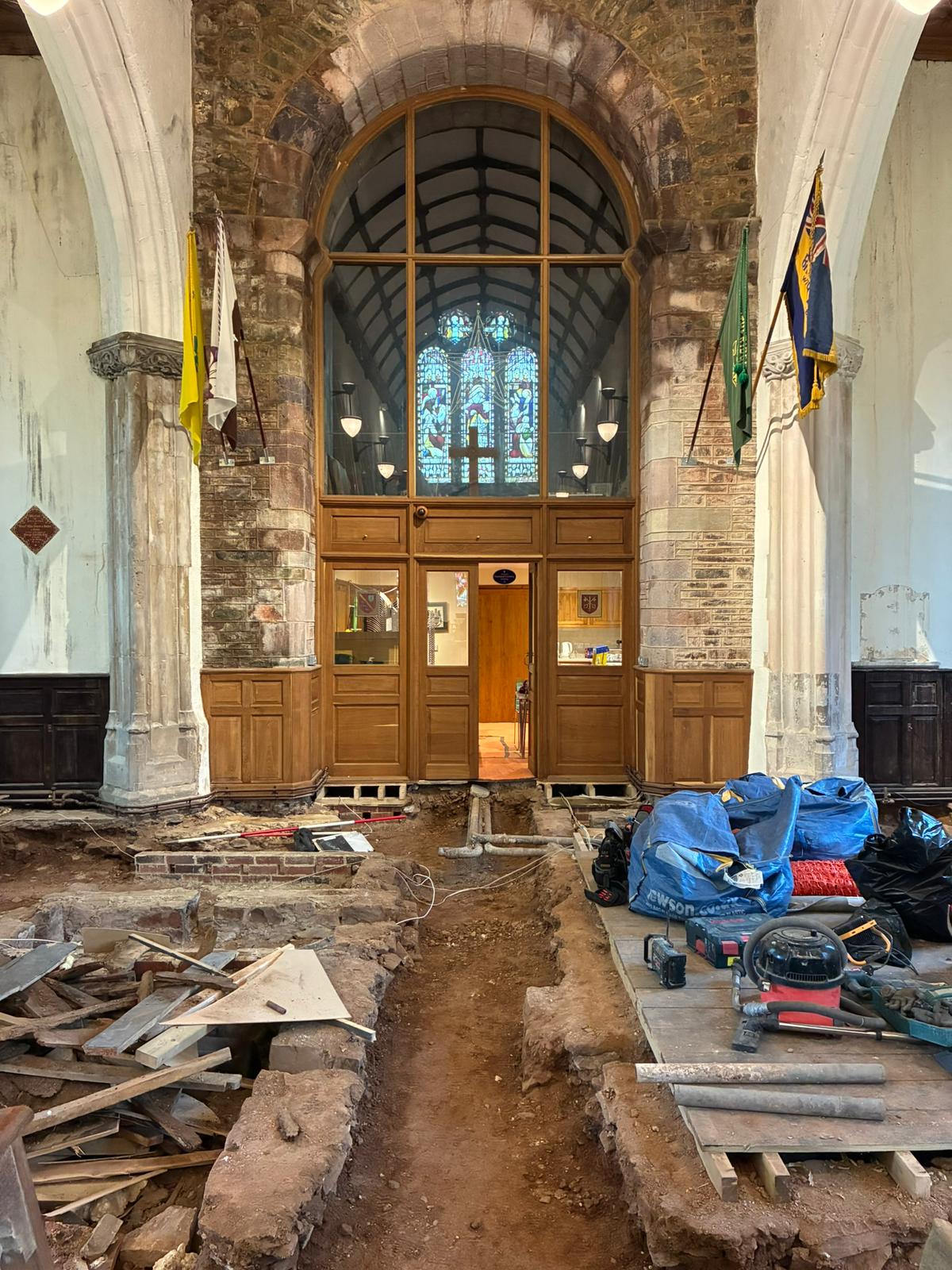
Renovation work in older buildings often reveals what’s hidden beneath the surface — and sometimes that’s more than just old wiring.
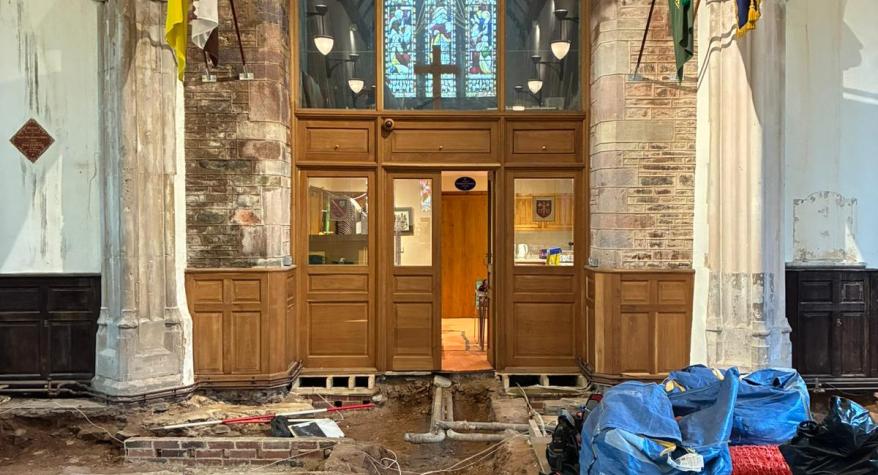
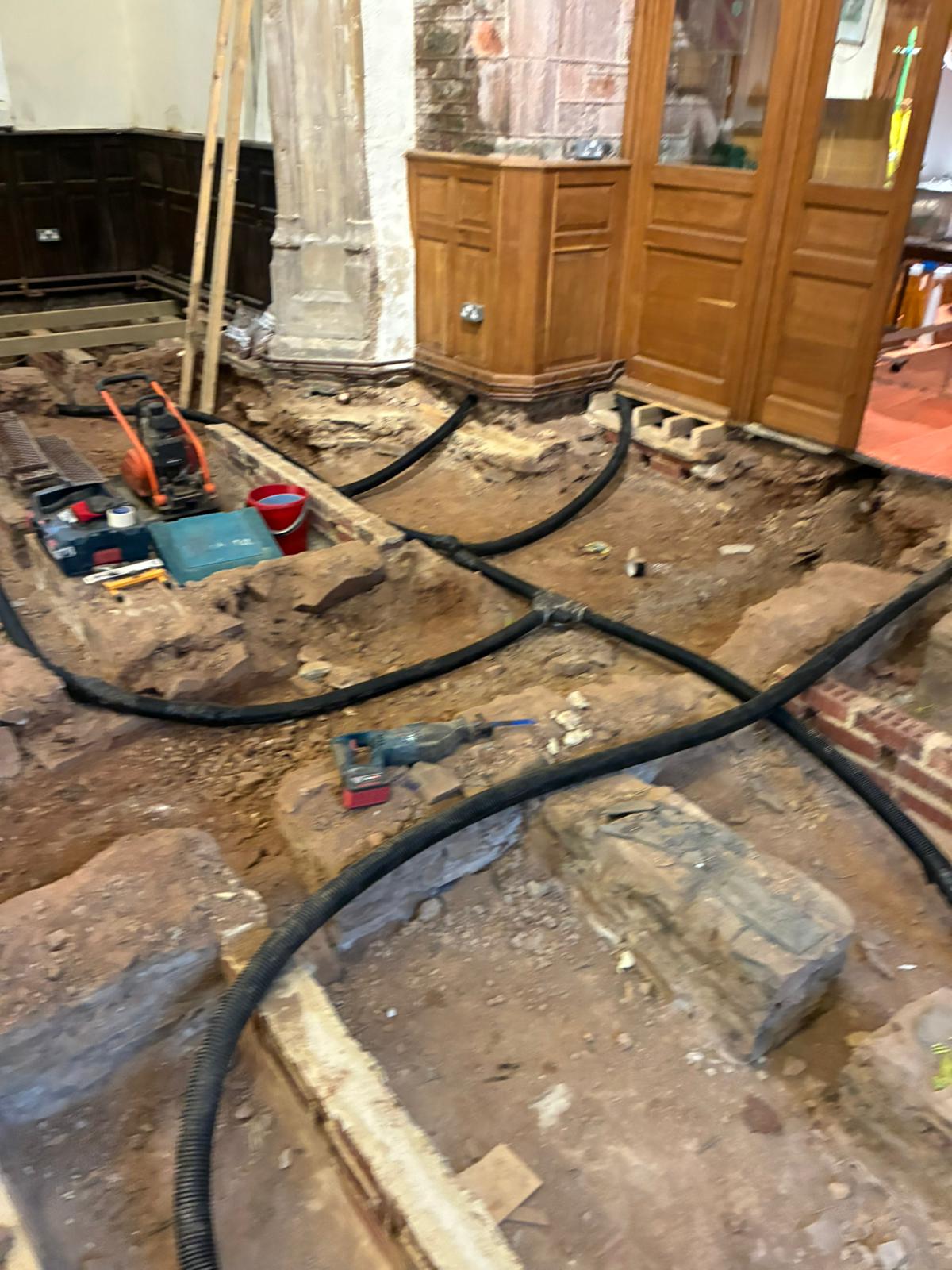
Here at Two Moors Electrical, we were recently working at St John the Baptist Church in Witheridge, where major renovation works were underway to replace the existing timber floor with a new insulated solid slate floor construction. As the original flooring was lifted, a previously hidden crypt was uncovered beneath, including historic burials dating back many years.
While that discovery was carefully managed and documented, our focus was on something equally important for the long term: the electrical installation beneath the floor.
Why Renovation Is the Right Time to Review Electrical Systems
In older buildings, especially churches and heritage properties around Witheridge, electrical wiring is often routed through floor voids that haven’t been accessed for decades.
Once the timber floor was removed, it provided a rare opportunity to:
- Inspect the existing wiring
- Remove redundant cabling
- Make safe any outdated or exposed sections
- Plan improvements before the new floor sealed everything back up
This is exactly the stage where electrical systems should be reviewed — not after new finishes are installed.
Assessing and Updating the Installation
With the floor void exposed, we carried out a full assessment of the circuits running beneath the church floor.
The works included:
- Inspecting and verifying existing cabling
- Removing redundant wiring no longer in use
- Making safe and securing remaining circuits
- Extending the existing ring circuit
- Installing four new double socket outlets while access was available
Adding the additional socket outlets at this stage avoids future disruption and ensures the space remains practical for modern use.
Protecting the Wiring Before the New Floor Was Installed
One of the key considerations was how the cabling would sit beneath the new insulated solid floor.
The new floor construction included glass-based insulation material, which, if left in direct contact with cabling, could:
- Offer limited mechanical protection
- Make future access more difficult
- Leave wiring vulnerable once sealed beneath the slab
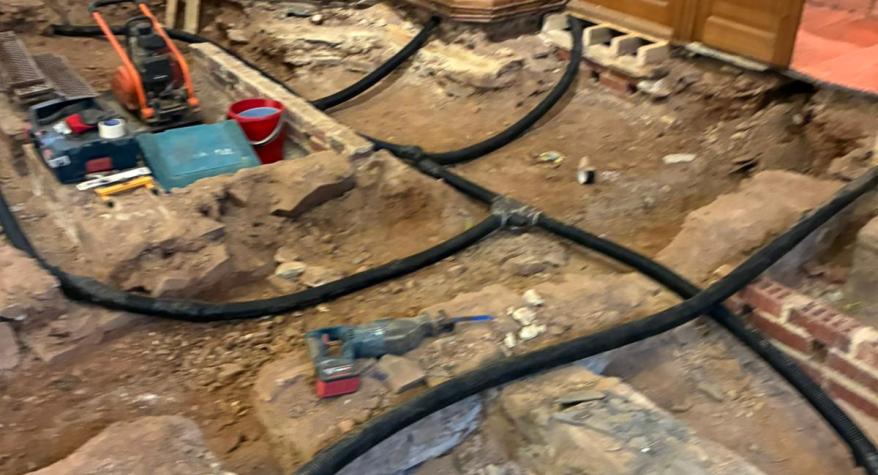
To address this, we installed 50mm ducting, carefully sliced and fitted to provide mechanical protection around the existing cabling. This was then secured appropriately to ensure it remained in place prior to insulation and floor installation.
Providing mechanical protection at this stage ensures the installation remains suitable and protected once the floor is permanently sealed.
Working in a Unique Environment
Projects like this in Witheridge are a reminder that electrical work isn’t always straightforward domestic installation.
Working in a historic church, above a newly uncovered crypt, certainly isn’t a typical setting. But the principles remain the same:
- Assess properly
- Remove what’s no longer needed
- Protect what remains
- Future-proof where possible
Renovation work provides a valuable opportunity to bring older installations up to date before new finishes are installed.
A Good Example of Doing It at the Right Time
Once a new solid floor is installed, access becomes significantly more difficult. Addressing the electrical installation during renovation avoids:
- Future disruption
- Additional cost
- The need to disturb new finishes
Whether in a church, a listed building, or a domestic renovation, assessing and updating wiring during structural works is always the sensible approach.
For projects in Witheridge and across North Devon where floors, extensions, or major alterations are being carried out, it’s worth ensuring the electrical installation is reviewed before everything is closed up again.
If you'd like to enquire about upgrading your electrics, either give us a call or get in touch today!