Electrical bonding is one of those parts of an electrical system that most homeowners never see — and rarely hear explained properly.
Yet it plays a critical role in safety, particularly in older properties, rural homes, and buildings with metal services such as water, gas, or oil pipes.
This article explains what bonding is, why it’s required, and why it’s something we always take seriously during an Electrical Installation Condition Report (EICR).
What Is Electrical Bonding?
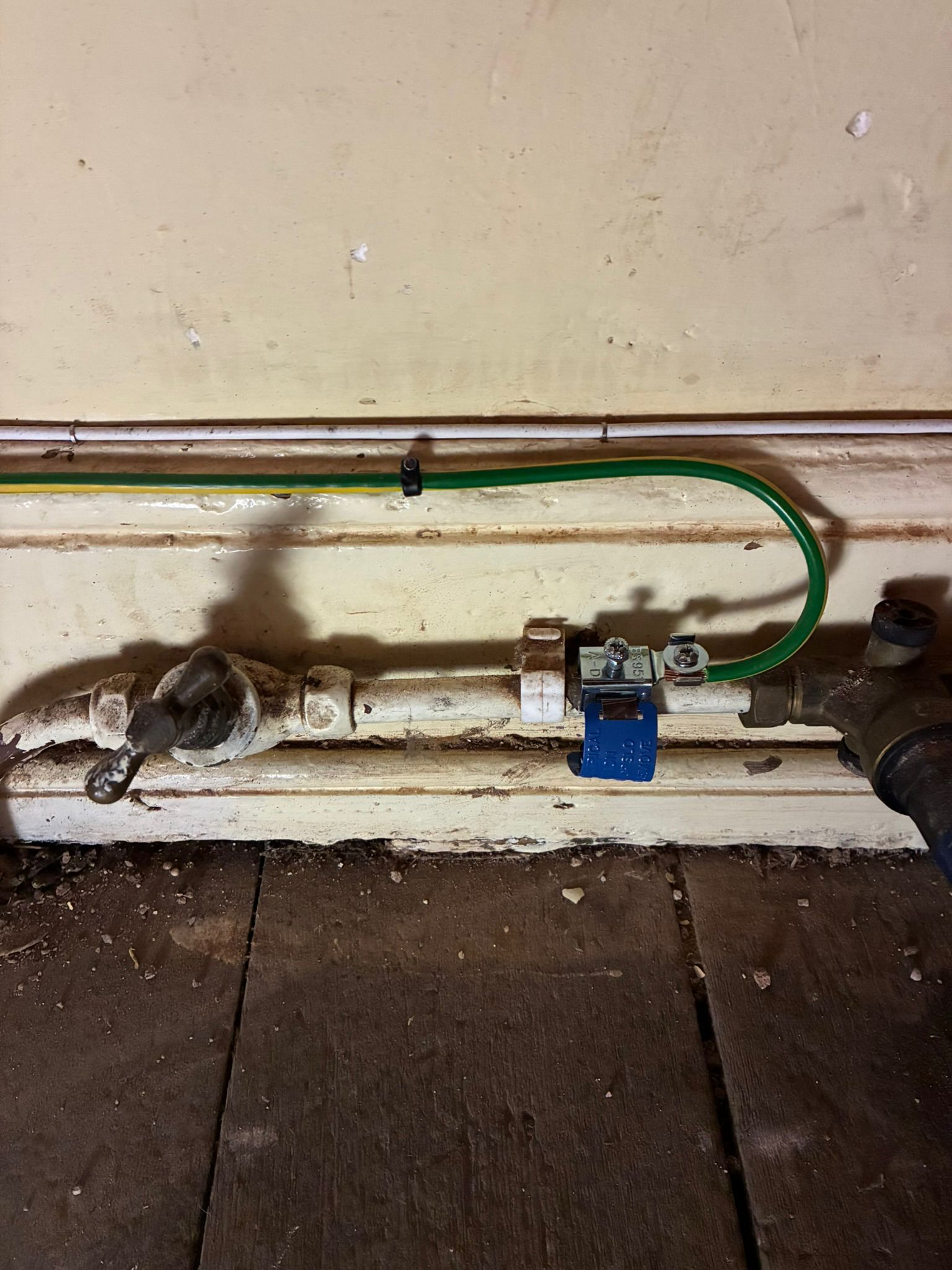
Electrical bonding (more accurately called main equipotential bonding) is the process of connecting certain metal parts of a building to the electrical earthing system.
These metal parts commonly include:
- Water pipes
- Gas pipes
- Oil pipes
- Structural metalwork (where applicable)
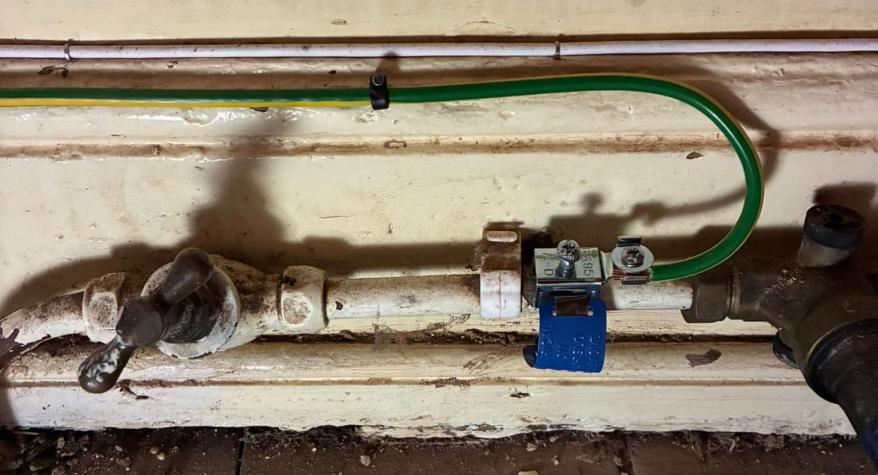
The bonding is done using green-and-yellow conductors, which link these metal services back to the main earthing point of the installation.
Why Is Bonding Necessary?
Bonding is not there to make appliances work — it’s there to keep people safe.
Its main purposes are to:
- Reduce the risk of electric shock
- Ensure metal parts remain at the same electrical potential
- Provide a safe path for fault currents
- Help protective devices (such as circuit breakers and RCDs) operate correctly
Without proper bonding, a fault could make one metal surface live while another remains at earth potential — creating a serious shock risk.
What Happens If Bonding Is Missing or Incorrect?
When bonding is absent, damaged, or not connected correctly:
- Fault currents may travel through unintended paths
- Pipework can become part of the fault path
- Protective devices may not disconnect quickly enough
- Shock risk increases, especially in fault conditions
In some cases, bonding conductors may be present but:
- Cut
- Loose
- Disconnected
- Terminated incorrectly
This is why visual checks alone are not enough.
Bonding vs Earthing — What’s the Difference?
This is a common source of confusion.
- Earthing connects the electrical system to the ground
- Bonding connects metal parts within the property to that earthing system
Both are essential, and one does not replace the other.
How Bonding Is Checked During an EICR
During an EICR, bonding is checked by:
- Verifying the correct conductors are present
- Confirming they are connected at both ends
- Checking continuity to ensure they actually work
- Making sure conductor sizes are suitable
Simply seeing a green-and-yellow cable is not enough — it must be properly connected and effective.
Why Bonding Is Especially Important in Older or Rural Properties
Bonding issues are more commonly found in:
- Older installations
- Properties with oil supplies
- Homes with metal water services
- Rural or isolated properties
Over time, bonding conductors can be altered, cut, or removed during plumbing or renovation work, often without anyone realising the electrical safety impact.
Why Not All Inspections Find the Same Issues
Bonding problems can be easy to miss if an inspection:
- Relies heavily on paperwork
- Focuses only on what’s visible
- Doesn’t trace or test conductors
A thorough inspection involves checking what the system is actually doing, not what it appears to be doing.
What This Means for Homeowners
If bonding issues are identified, it doesn’t automatically mean your home is unsafe — but it does mean:
- The safety system isn’t performing as designed
- There may be increased risk under fault conditions
- Remedial work should be considered
The key is understanding the issue and addressing it proportionately.
In Summary
Electrical bonding:
- Is a fundamental safety feature
- Protects against electric shock
- Often goes unnoticed until properly inspected
- Can be compromised without obvious signs
That’s why bonding is always carefully checked during an EICR — and why it’s never treated as a box-ticking exercise.
A well-bonded installation is a safer installation.
Contact us today to arrange your next EICR and have your electrical bonding checked.