We were recently contacted by a homeowner whose kitchen lights had tripped and would not reset. The circuit breaker would trip immediately every time it was turned back on, leaving the kitchen without any lighting.
Not All Downlights Are the Same: A Call-Out That Prevented a Serious Fault
Although we were already on another job, we were able to attend the property the same day due to the nature of the fault.
Initial Findings at the Consumer Unit
The property was fitted with a split-load consumer unit, with multiple circuits protected by RCDs. When attempting to reset the lighting circuit:
- The breaker would not hold
- It tripped instantly each time
This immediately indicated an ongoing fault rather than a one-off surge.
The homeowner explained that one of the downlights had failed, and after attempting to replace it, the lights would no longer work.
Investigating the Kitchen Lighting
Access to the loft space above the kitchen was limited. The loft hatch was small, the space was heavily insulated, and safe access was not possible from above.
As a result, the investigation continued from below by removing the downlight fittings.
At first glance, the cable feeding the downlight appeared to be black flex, which would not be unusual in older installations.
However, once the fitting was removed, it became immediately clear that something was wrong.
What We Actually Found
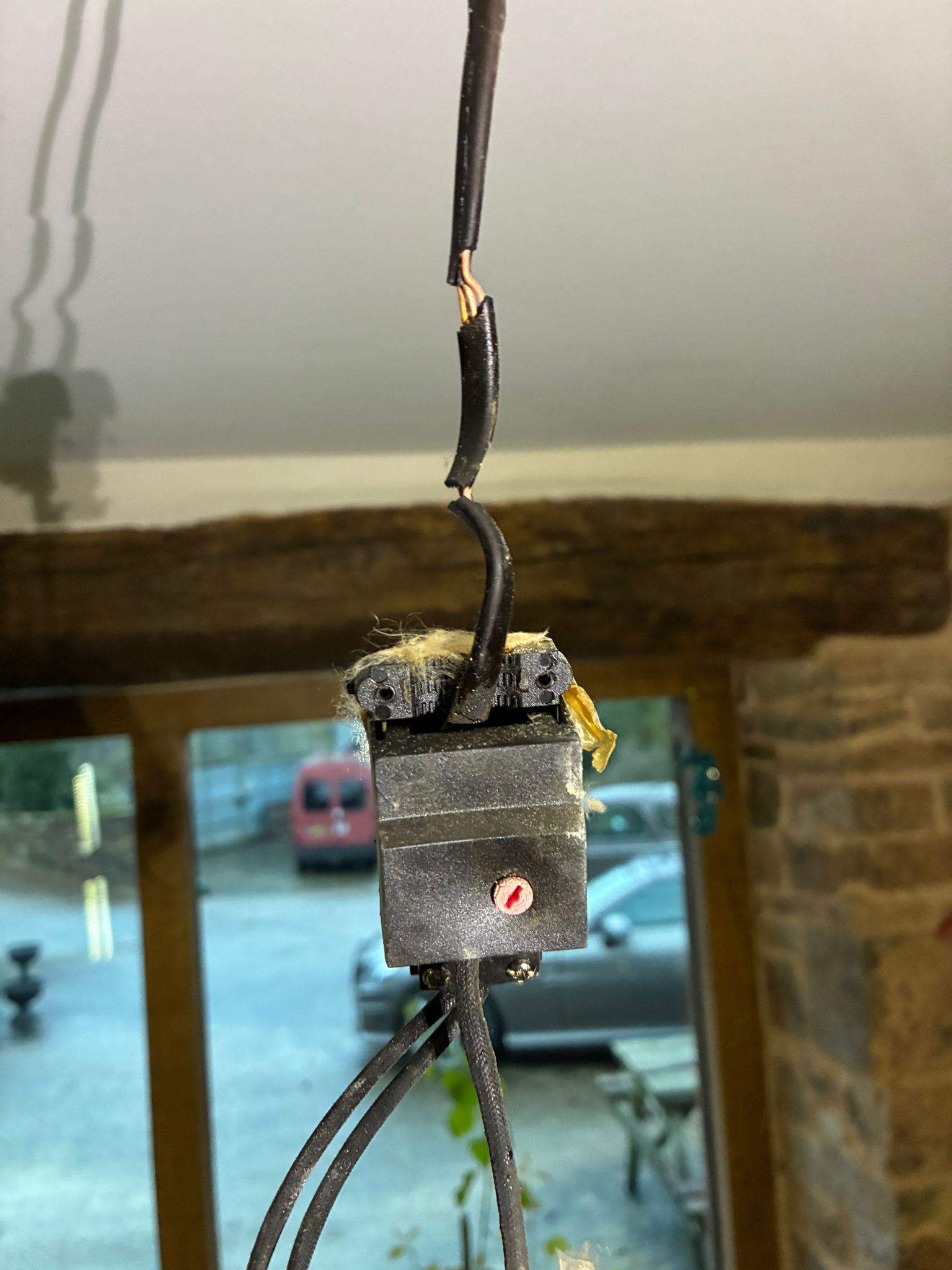
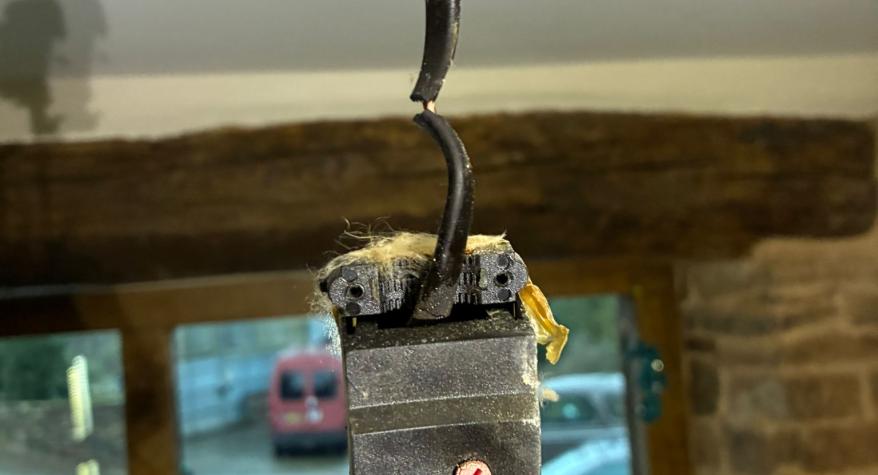
The cable was not flex at all — it was twin and earth cable that had been exposed to excessive heat.
The insulation had:
- Become brittle
- Melted and hardened
- Begun to break away, exposing the conductors
The heat damage was severe enough to explain why the circuit breaker was tripping and why the fitting could no longer be reassembled safely.
A second downlight in the same area showed similar signs of overheating, though not as advanced.
The Cause: Incorrect Downlight Selection
The downlights installed in the kitchen were not suitable to be covered by insulation. These fittings rely on heat dissipating through the rear of the unit.
However, they had been buried under approximately 6–10 inches of insulation, preventing heat from escaping.
Over time, this caused:
• Excessive heat build-up
• Cable insulation failure
• A persistent electrical fault
Importantly, other downlights in the kitchen that were not covered by insulation were found to be in good condition.
Why This Is a Common and Dangerous Mistake
Downlights are often seen as simple fittings, but:
- Different designs manage heat in very different ways
- Some are insulation-cover rated, others are not
- Symbols and manufacturer instructions matter
Installing the wrong type of downlight in the wrong environment can lead to:
- Repeated tripping
- Cable damage
- Increased fire risk
This is not always immediately obvious until a fault develops.
The Solution
The customer was advised that the safest course of action is to:
- Replace the affected downlights with insulation-cover–rated, fire-rated fittings
- Install new connection points where heat damage has occurred
- Ensure all fittings are suitable for the environment they’re installed in
We’ll be returning to complete these works and reinstate the lighting safely.
The Bigger Lesson
This call-out highlights an important point:
You may be called out for one issue — but during proper investigation, something far more serious can be uncovered.
While many people are comfortable purchasing and fitting their own light fittings, understanding:
- Heat dissipation requirements
- Insulation ratings
- Cable suitability
- Fire performance
...is where professional knowledge becomes critical.
In Summary
- Not all downlights are the same
- Not all installations are suitable for insulation coverage
- Heat damage can occur slowly and out of sight
- Circuit breakers often trip to prevent something worse
This is exactly why faults should be investigated properly — not just reset and left. If you're based in Devon and would like to speak with us regarding your Downlights, feel free to get in touch with us.