We recently carried out an Electrical Installation Condition Report (EICR) at a thatched cottage. Properties like this often have specific insurance requirements, and regular electrical inspections are commonly requested due to the increased fire risk associated with thatched roofs.
Why Proper Bonding Matters — And Why Not All EICRs Are the Same
For homeowners, this makes a thorough and accurate EICR especially important — not just for compliance, but for genuine peace of mind.
Reviewing Previous Certification
As part of the inspection, we were provided with previous electrical documentation. On the surface, everything appeared to be in order.
However, as with all inspections, paperwork is only the starting point. The real value of an EICR comes from what’s physically present — and what’s actually connected.
What We Found During Testing
When beginning testing at the consumer unit, we noticed bonding conductors were missing from where they should normally terminate.
This prompted further investigation.
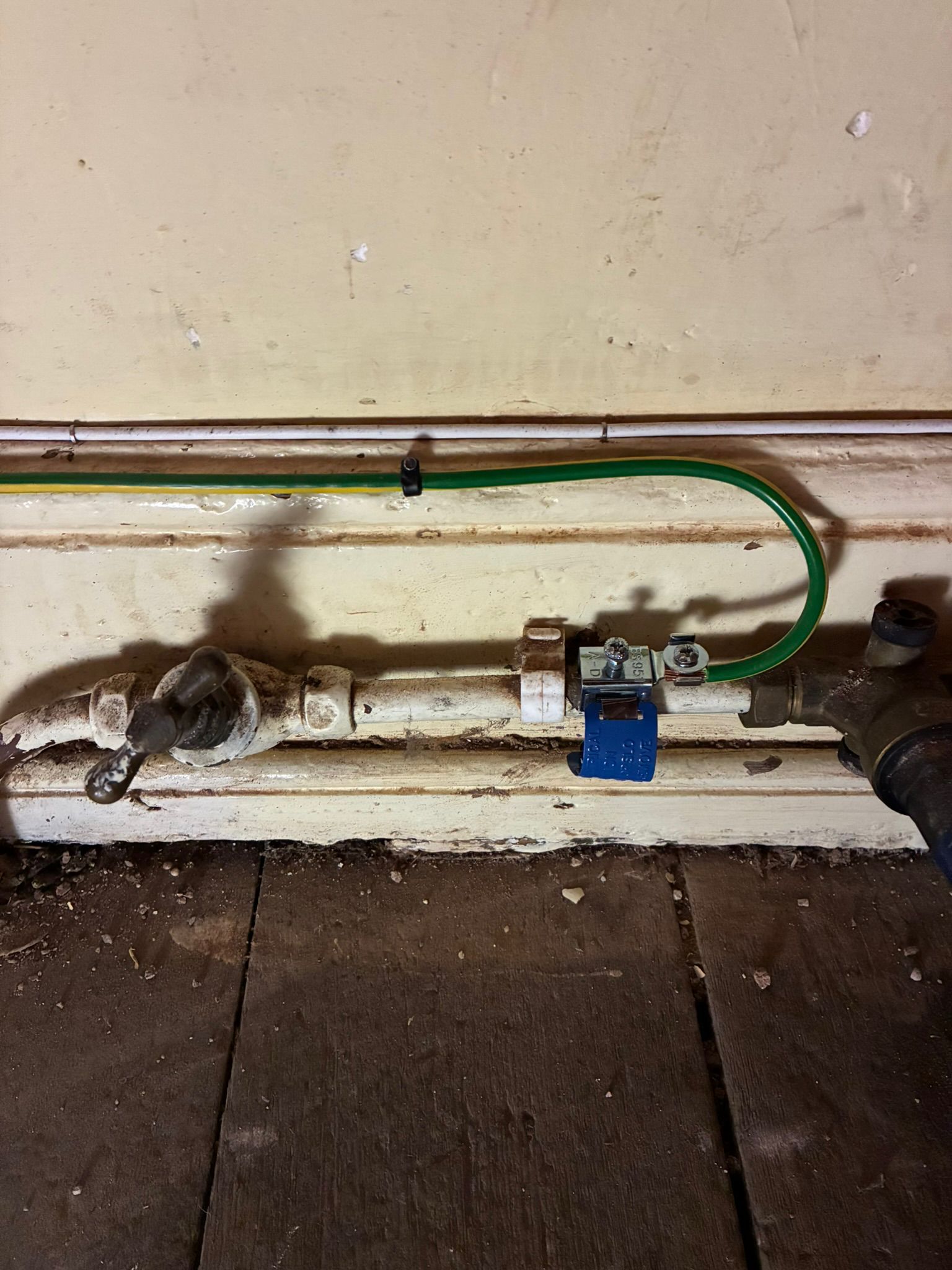
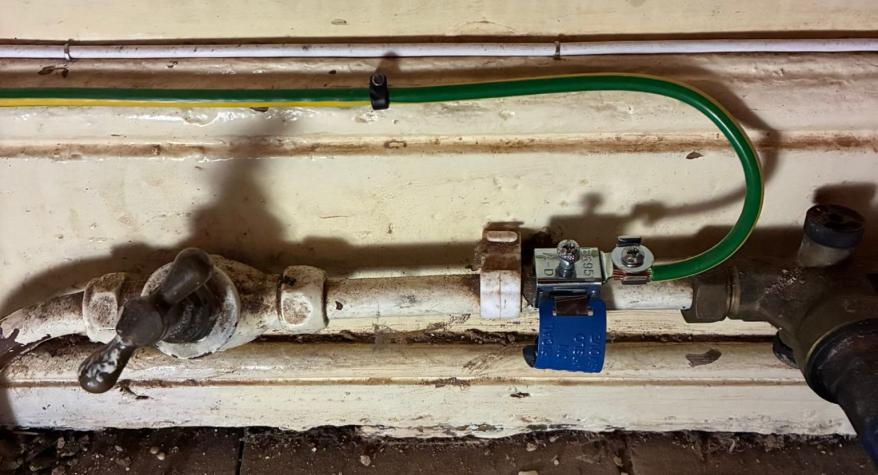
- The main bonding conductor to the water pipe had been cut and was no longer connected back to the consumer unit
- The bonding conductor associated with the oil supply was present, but not connected to anything at all
- Because of this, we were seeing parallel earth paths through the pipework rather than through the intended bonding conductors
In simple terms, parts of the installation were relying on metal pipework for earthing continuity instead of the designed safety conductors.
What Is Bonding — And Why Is It So Important?
Main equipotential bonding is there to:
- Reduce the risk of electric shock
- Ensure all metal services are at the same electrical potential
- Allow protective devices to operate correctly under fault conditions
If bonding conductors are missing, cut, or not connected properly:
- Fault currents may take unintended path
- Protective devices may not operate as designe
- Shock risk can increase, especially in fault conditions
This is particularly important in older properties and rural installations, where services such as water and oil pipes are common.
Why This Wasn’t Obvious on Paper
What made this case interesting is that bonding conductors were present — but not actually doing their job.
A visual glance alone could easily suggest:
- “There’s a green-and-yellow cable, so bonding must be in place”
Only by:
- Tracing conductors
- Checking continuity
- Verifying terminations
...can you confirm whether bonding is genuinely effective.
Why Not All EICRs Are the Same
This highlights an important point for homeowners:
not all electrical inspections are carried out to the same depth.
A thorough EICR involves:
- Looking beyond appearances
- Verifying that conductors are connected, not just present
- Testing real fault paths, not assumed ones
Two reports may look similar on paper, but the level of investigation behind them can be very different.
Why This Matters for High-Risk Properties
In a thatched property, where fire risk is a serious concern:
- Electrical safety measures need to be fully effective
- Insurance requirements often expect evidence of proper inspection
- Hidden issues like this can undermine confidence in the installation
Identifying and explaining these findings allows issues to be addressed before they become a problem, rather than after an incident.
The Real Value of a Proper EICR
An EICR isn’t about finding faults for the sake of it. It’s about:
- Understanding how the installation is actually behaving
- Confirming that safety systems work as intended
- Giving homeowners clear, factual information
In this case, the inspection highlighted a bonding issue that wasn’t immediately obvious — but was important to resolve.
That’s exactly what an EICR is meant to do. If you'd like to enquire about booking an EICR in Devon, get in touch with us today.