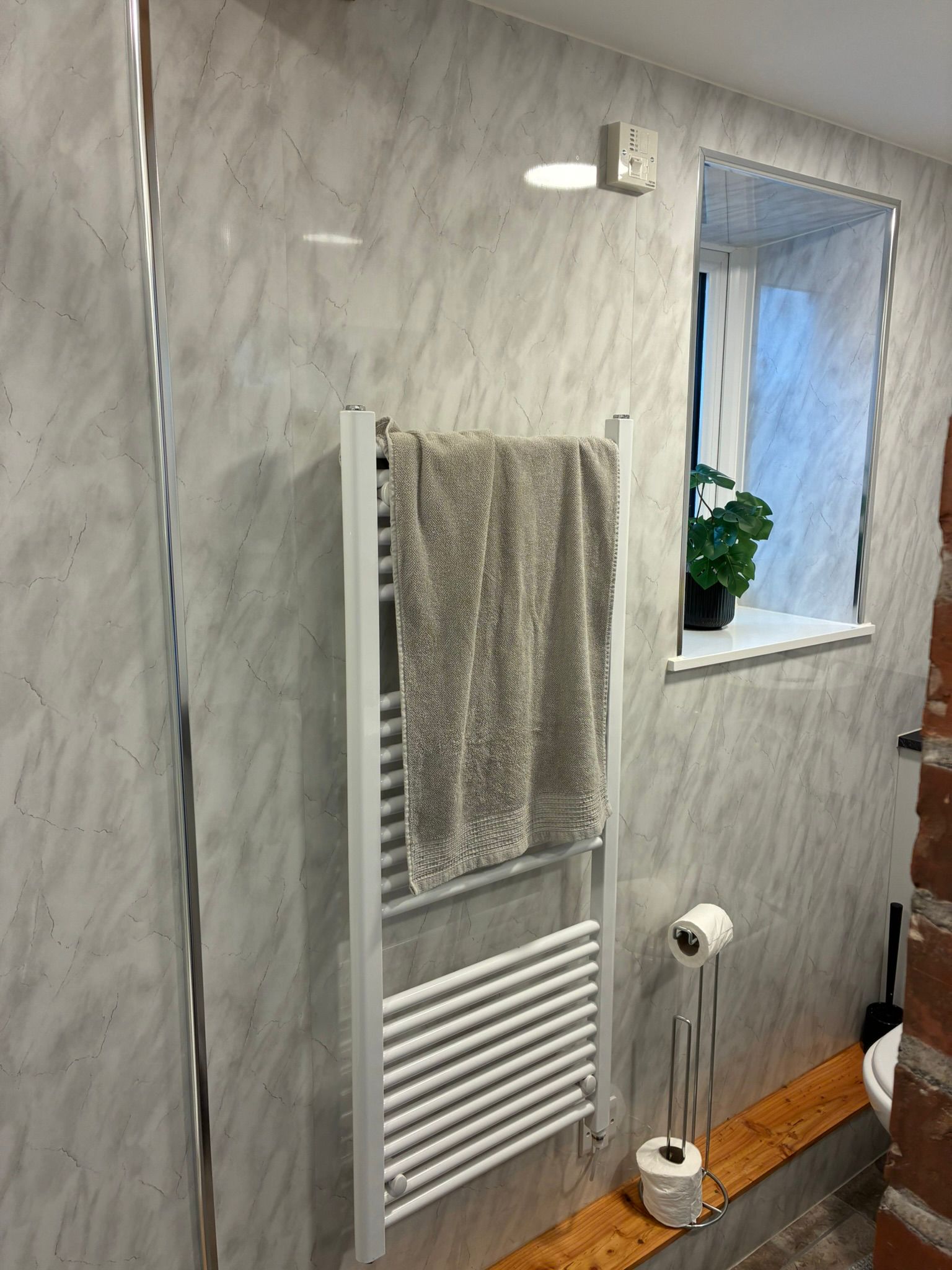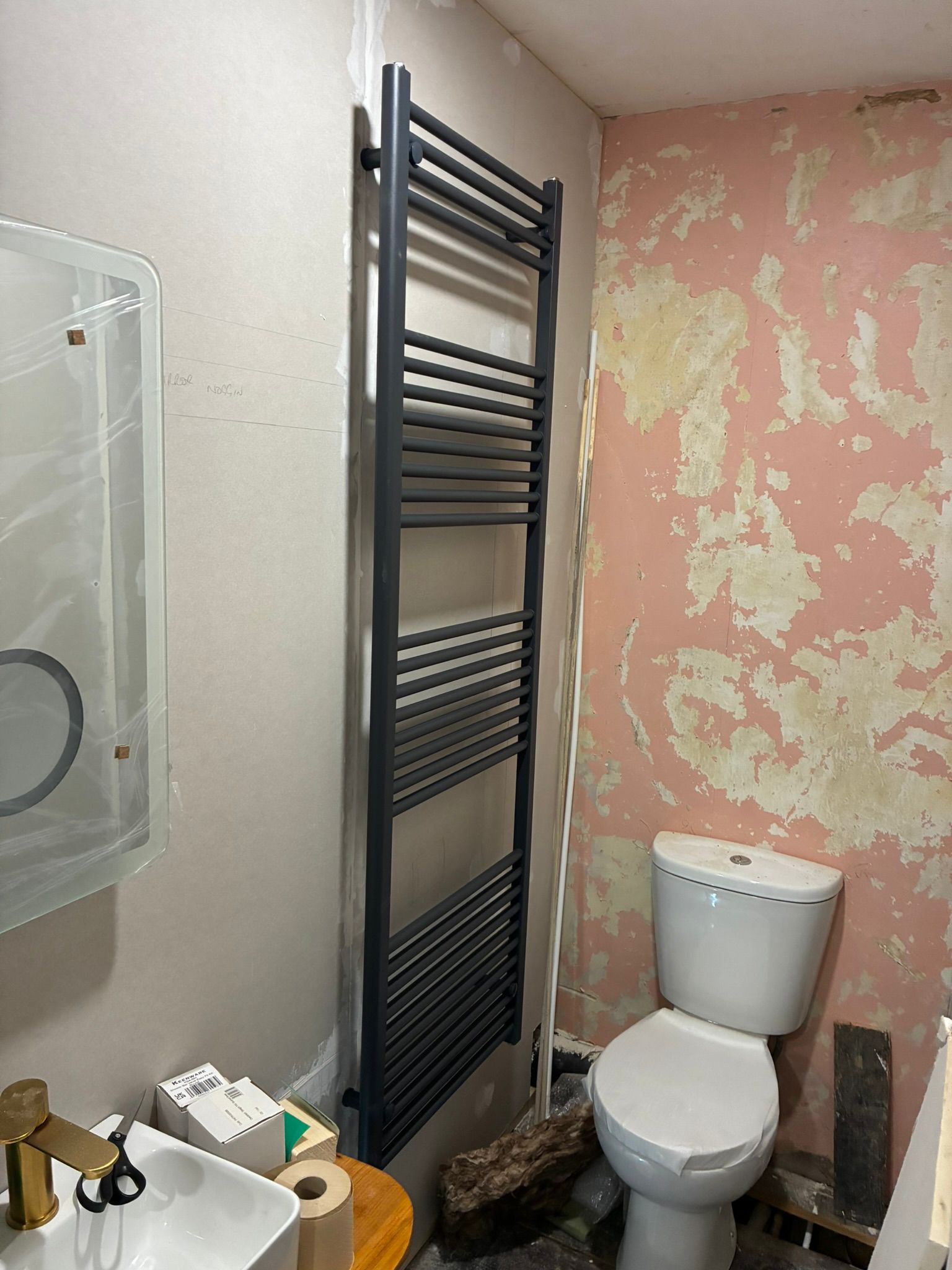
Electric towel radiators have become a popular addition to bathrooms and cloakrooms. They’re neat, practical, and do exactly what most people want — warm towels when you need them.

Electric Towel Radiators Explained: Controls, Comfort, and Using Them the Right Way

However, not all towel radiators work in the same way, and how they’re controlled makes a big difference to comfort, running costs, and long-term reliability.
This guide explains the main types of electric towel radiators and how to control them properly.
Dual Fuel vs Fully Electric Towel Radiators
There are two common types of towel radiators used in homes.
Dual Fuel Towel Radiators
Dual fuel models are connected to the central heating system but also contain an electric heating element.
This allows:
- Normal operation during the heating season
- Electric-only operation in summer, so towels can still be dried without running the boiler
They’re a good option where you want flexibility throughout the year.
Fully Electric (Sealed) Towel Radiators
These units are completely independent of the heating system and rely solely on an internal electric element.
They’re commonly used where:
- There is no central heating pipework nearby
- A small space needs independent heat
- The towel radiator is doing more than just drying towels
Built-In Thermostatic Controls vs Non-Thermostatic Models
One of the most important differences between towel radiators is how they’re controlled.
Towel Radiators With Built-In Thermostatic Controls
Some electric towel radiators come with integrated thermostatic controls. These allow you to:
- Set a target temperature
- Use built-in timers or schedules
- Leave the radiator running for extended periods safely
Because the temperature is regulated, these models are well suited to:
- Regular use
- Heating a small bathroom
- Keeping towels warm consistently
They give the most control and flexibility.
Towel Radiators Without Thermostatic Controls
Other models simply heat up when powered on, with no temperature regulation.
These are not designed to be left on continuously. In real-world use, we’ve seen:
- Elements overheating
- Premature element failure
- Radiators being left on unintentionally
This isn’t a fault with the radiator — it’s usually down to how it’s controlled.
How We Recommend Controlling Non-Thermostatic Towel Radiators
If a towel radiator doesn’t have built-in thermostatic control, adding the right external control makes all the difference.
Option 1: Boost Timer (Great for Drying Towels)
A boost timer allows the user to press a button and select how long the radiator runs for.
Typical options include:
- 15 minutes
- 30 minutes
- 1 hour
- 2 hours
- 4 hours
This works perfectly for towel drying:
- Step out of the shower
- Hang the towel
- Press boost for a set period
- The radiator turns itself off automatically
Simple, safe, and effective.
Option 2: Seven-Day Programmer (Better for Room Heating)
If the towel radiator is being used to help heat a room, such as a small downstairs bathroom, a seven-day programmer offers more control.
This allows you to:
- Set on and off times
- Control usage across the week
- Match heating to actual occupancy
It’s ideal where the radiator is doing more than just drying towels and is part of the room’s overall heating strategy.
Choosing the Right Setup for Your Needs
In simple terms:
- Just drying towels?
A non-thermostatic radiator with a boost timer works very well. - Heating a room regularly?
A thermostatic radiator or a seven-day programmer is the better option. - Want maximum flexibility?
Built-in thermostatic controls offer the most convenience.
Matching the radiator and controls to how you actually use the space avoids breakdowns and improves comfort.
The Takeaway
Electric towel radiators are a great feature — but only when they’re controlled properly.
Understanding:
• The type of radiator
• Whether it has thermostatic control
• How it’s intended to be used
Helps ensure:
• Better comfort
• Lower running costs
• Longer element life
• Fewer problems over time
A small amount of planning makes a big difference to how well they perform.