Why Homeowners in Morehays, Tiverton Are Choosing to Modernise Older Lighting
Many homeowners are choosing to replace older pendant light fittings with modern LED downlights to create a cleaner, brighter and more contemporary look.
We were recently asked to carry out this type of upgrade at a property in Morehays, Tiverton, after the customer had a new loft hatch installed. During those works, the original hallway pendant had been temporarily relocated into the loft space, leaving the customer wanting a more attractive and practical lighting arrangement for the hallway.
At first glance, replacing one light fitting with four recessed downlights sounds like a straightforward project. However, once older light fittings are removed, it’s common to discover that the existing wiring is doing far more than simply supplying the light itself.
This is where professional planning becomes just as important as the installation.
Why Older Ceiling Roses in Morehays, Tiverton Often Hide More Wiring Than Expected
One of the biggest surprises homeowners encounter when replacing older light fittings is the number of conductors hidden behind the ceiling rose.
Many traditional lighting circuits were designed using what electricians refer to as a loop-in, loop-out arrangement. In simple terms, the ceiling rose often acts as the central connection point for several parts of the lighting circuit rather than just supplying the pendant itself.
This means that when the original fitting is removed, those existing connections still need to remain safely connected if the rest of the lighting circuit is to continue operating correctly.
What initially appears to be a simple decorative upgrade can quickly become much more involved once the existing installation is exposed.
Understanding Existing Lighting Circuits Before Installing LED Downlights in Tiverton
For this project in Morehays, Tiverton, the first step wasn’t installing the new downlights—it was understanding how the existing lighting circuit had originally been designed.
Older lighting installations often contain permanent live conductors, switched lives and neutral conductors that all terminate within the ceiling rose.
If those connections are altered incorrectly, the consequences can range from lights remaining permanently switched on to parts of the circuit no longer operating correctly or protective devices tripping unexpectedly.
Taking time to understand the existing installation before making alterations is what allows modern lighting to be introduced safely while preserving the integrity of the original circuit.
Using a Maintenance-Free Junction Box During LED Downlight Installation in Morehays, Tiverton
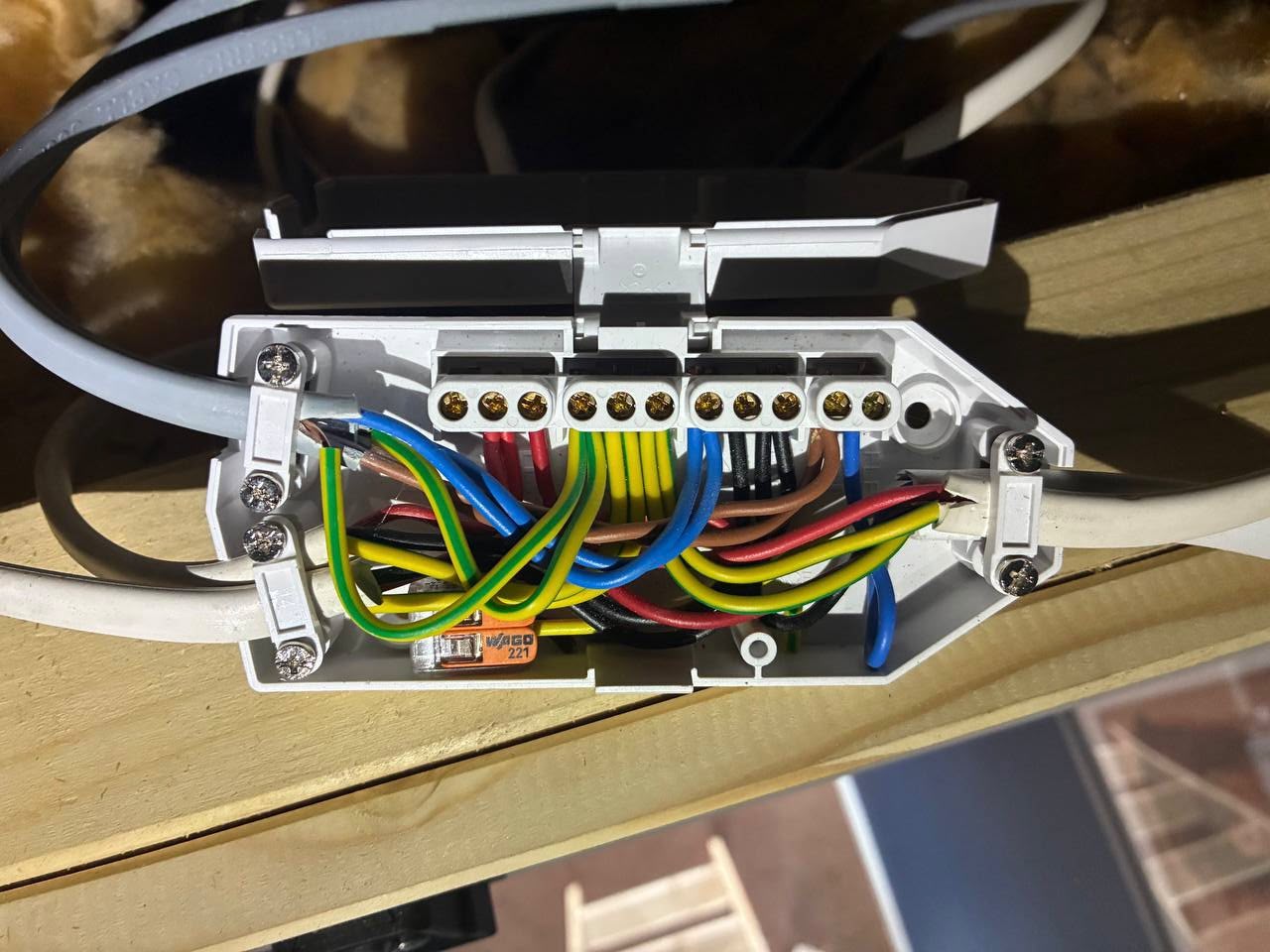
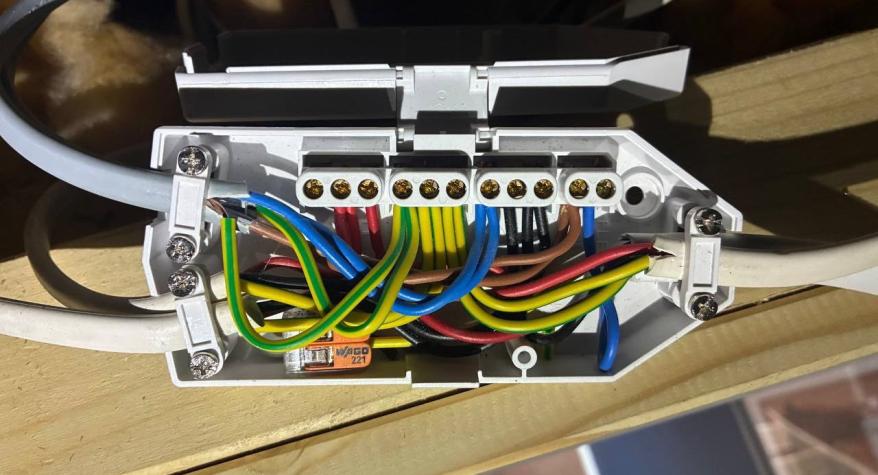
Once the existing wiring arrangement had been identified, the original ceiling rose connections were professionally transferred into a maintenance-free junction box.
Rather than trying to force multiple existing conductors into the new downlight fittings, the junction box allowed the original lighting circuit to remain exactly as intended while providing a new connection point for the revised lighting layout.
From this point, new cabling was installed to supply the four LED downlights, giving the customer the modern appearance they were looking for without compromising the existing electrical installation.
The completed arrangement is neat, accessible where required and designed to provide reliable operation for many years to come.
Why Professional Lighting Upgrades in Morehays, Tiverton Begin with Understanding the Existing Installation
Modern lighting upgrades aren’t simply about fitting new products.
Every property has its own electrical history, and understanding that history is often the key to achieving a successful result.
A professional lighting upgrade involves understanding how the original installation functions, planning the alterations carefully and selecting the most appropriate method of adapting the existing circuit.
In many cases, the safest and neatest solution isn’t immediately visible once the work is complete—but it is the reason the new lighting continues to operate safely and reliably long after installation.
Replacing Older Light Fittings in Morehays, Tiverton – Summary
This recent lighting upgrade in Morehays, Tiverton demonstrates that replacing older light fittings is often about much more than changing what can be seen on the ceiling.
Projects like this show that successful lighting upgrades aren’t simply about fitting new lights. Understanding the existing installation, planning the alterations carefully and preserving the integrity of the original circuit are what allow modern lighting to be installed safely, neatly and reliably.
It’s this combination of careful planning, engineering judgement and attention to detail that helps ensure modern lighting performs exactly as the customer expects while maintaining the safety and reliability of the original electrical installation.
Frequently Asked Questions: Replacing Older Light Fittings and Installing LED Downlights
Replacing an older pendant light with modern LED downlights can completely transform the look of your home. However, many homeowners are surprised to discover that what appears to be a simple job often involves much more wiring than expected.
Older lighting circuits are commonly designed with the ceiling rose acting as the central connection point for the entire circuit. Understanding how these connections work is essential before any alterations are made.
Below are some of the most common questions we receive from homeowners considering this type of lighting upgrade.
Why are there so many wires behind my ceiling light?
Many older homes use the ceiling rose as the main connection point for the lighting circuit. Rather than supplying just one light fitting, it often contains the incoming power supply, the cable feeding the next light and the wiring to the wall switch.
This is why removing an older light fitting can reveal several cables instead of the one or two many homeowners expect.
Why it matters: Each conductor performs a different job. Disconnecting or reconnecting them incorrectly can stop the lighting working properly or create an unsafe installation.
Can I replace a pendant light with LED downlights?
In many cases, yes.
However, replacing a single pendant with multiple LED downlights usually requires more than simply swapping one fitting for another. The original wiring often needs to be adapted while maintaining all of the existing circuit connections safely.
A professional installation ensures the new lighting looks modern while preserving the integrity of the existing electrical installation.
What is a loop-in, loop-out lighting circuit?
A loop-in, loop-out circuit is a common method of wiring lighting in older properties.
Instead of every cable returning directly to the consumer unit, the electrical supply passes from one light fitting to the next. The ceiling rose often acts as the central connection point for the entire lighting circuit.
Understanding this arrangement is essential before altering or removing an existing light fitting.
Why can’t all the wires simply be removed?
Although they appear to belong to the light fitting, many of the cables actually form part of the lighting circuit itself.
Removing or disconnecting them without understanding their purpose can leave other lights without power, cause lights to remain permanently on or create faults within the circuit.
The wiring behind the fitting is often doing much more than homeowners realise.
Why would an electrician install a maintenance-free junction box?
When replacing a ceiling rose with LED downlights, the original circuit connections still need to remain safely connected.
A suitable maintenance-free junction box provides a secure location for these connections above the ceiling while allowing new wiring to supply the downlights.
This maintains the safety and reliability of the original lighting circuit while achieving a much cleaner appearance.
Why does replacing a light fitting sometimes become more complicated than expected?
What begins as a cosmetic upgrade can quickly reveal older wiring methods that require additional work.
Many older lighting circuits contain more conductors and connections than modern light fittings are designed to accommodate.
Taking the time to understand the existing installation helps ensure the finished work remains safe and reliable.
Can changing a light fitting trip the circuit breaker?
Yes.
If conductors are accidentally connected incorrectly or a short circuit is created during installation, the protective device may operate.
This is one reason why electrical work should always begin with safely isolating the circuit before any wiring is disturbed.
Is it safe to leave wiring hidden above the ceiling?
Yes, provided it has been installed correctly.
Where wiring remains above the ceiling after alterations, it should be terminated using suitable products and installed in accordance with current electrical standards.
Hidden wiring should remain safe, secure and appropriate for its location, even though it is no longer visible.
Can older lighting circuits be adapted for modern LED lighting?
In many cases they can.
Older lighting circuits can often be adapted to supply LED downlights while retaining the original circuit layout and protection.
Each installation should be assessed individually to ensure the existing wiring remains suitable and safe.
This means homeowners can often achieve a modern lighting scheme without the need for extensive rewiring.
What should I do if I remove a light fitting and find more wiring than expected?
The safest approach is to stop work and avoid disconnecting any further conductors until the wiring has been properly identified.
Many homeowners are surprised by the number of cables behind an older ceiling rose, but every conductor may perform an important function within the lighting circuit.
Taking photographs before disturbing the wiring and seeking professional advice can often save both time and unnecessary repairs.
Do LED downlights require different wiring?
Not necessarily.
The wiring method depends more on the existing lighting circuit than the type of fitting being installed.
During a conversion from a pendant light, new cables are commonly run from a central connection point to each individual downlight.
The objective is to create a safe installation that works with the existing circuit while meeting current electrical standards.
Why do electricians investigate the existing wiring before installing new lights?
Every property has its own wiring history, and older homes may have been altered several times over the years.
Inspecting the existing wiring allows the electrician to understand how the lighting circuit has been installed before making any changes.
This careful approach helps ensure the new lighting installation is safe, reliable and designed to provide many years of trouble-free operation.
To enquire about LED Lighting Upgrades in Tiverton, get in touch today!